

From centuries-old hot springs to world-class art islands, the Setouchi region of Japan reflects a global shift toward slower, more meaningful journeys. Set against the serene backdrop of Japan’s Inland Sea, the Setouchi region invites travelers to embrace a more mindful pace through onsen bathing (natural hot springs), contemporary art, and outdoor nature immersion. Celebrated for its rejuvenating thermal waters, tranquil islands, and art exhibits, the region offers a distinctive alternative to Japan’s bustling urban centers.
Kinosaki Onsen: one of Japan’s most celebrated hot spring towns
For centuries, onsen bathing has been central to Japanese culture. The mineral-rich thermal waters are believed to improve circulation, soothe muscle tension, and promote deep relaxation, while the quiet, meditative atmosphere of traditional bathhouses encourages mindfulness and connection to nature.
With a history spanning over 1,300 years, Kinosaki Onsen in Toyooka City, Hyogo Prefecture, is one of Japan’s most celebrated hot spring towns. The town is famed for its soto-yu meguri tradition of wandering through charming streets in yukata and visiting seven distinct public bathhouses, each with its own story. The entire town functions like a single ryokan, reflecting a spirit of hospitality preserved for centuries.
Accommodations include historic inns like KOBAYASHIYA, rebuilt in 1925 after the Great Hokutan Earthquake and designated a Registered Tangible Cultural Property. It blends architectural heritage with contemporary design following a 2021 renovation led by Suppose Design Office. Nearby, SANPOU NISHIMURAYA, is celebrated for its sukiya-style architecture, serene gardens, and seasonal kaiseki cuisine; inducted into Relais & Châteaux in 2016, it continues to share Kinosaki’s refined hospitality with the world.
Art as Wellness: Hyogo Prefectural Museum of Art
Increasingly, travelers are turning to art as a source of emotional and mental rejuvenation. Studies have shown that engaging with art, whether through viewing or participation, can lower cortisol levels, improve critical thinking, and spark joy and inspiration.
The Hyogo Prefectural Museum of Art is located in the HAT Kobe district of Chuo Ward, Kobe City, Hyogo Prefecture. Designed by world-renowned architect Tadao Ando, the museum opened in 2002 as a symbol of “cultural revival” following the Great Hanshin-Awaji Earthquake. It has since served as a key cultural hub in the region. The building is notable for its exposed concrete walls and expansive glass curtain walls. ? Inside, there is also the “Ando Gallery,” which showcases models of Mr. Ando’s works and related books are also on display, making it a valuable destination for architecture enthusiasts. The museum also hosts a diverse range of exhibitions throughout the year.
Art as Wellness: Benesse Art Site Naoshima
Launched in the late 1980s, Benesse Art Site Naoshima aspires to build a community through partnerships with locals and a harmony of nature, architecture, and art. It has created a nexus of museums and art facilities, turning Naoshima, Teshima, and Inujima into a place unlike any other in the world. The latest addition to this endeavor of more than thirty-five years is the Naoshima New Museum of Art. Located in a village, it marks architect Tadao Ando’s tenth contribution to the Benesse Art Site Naoshima constellation of museums and facilities, and is the first to bear the name of the island.
Setouchi’s world-class art institutions and installations invite visitors not only to observe but to reflect, connect, and experience art as a pathway to well-being.
Nakazu Banshoen and Mount Rokko: Ideal Settings for Forest Bathing
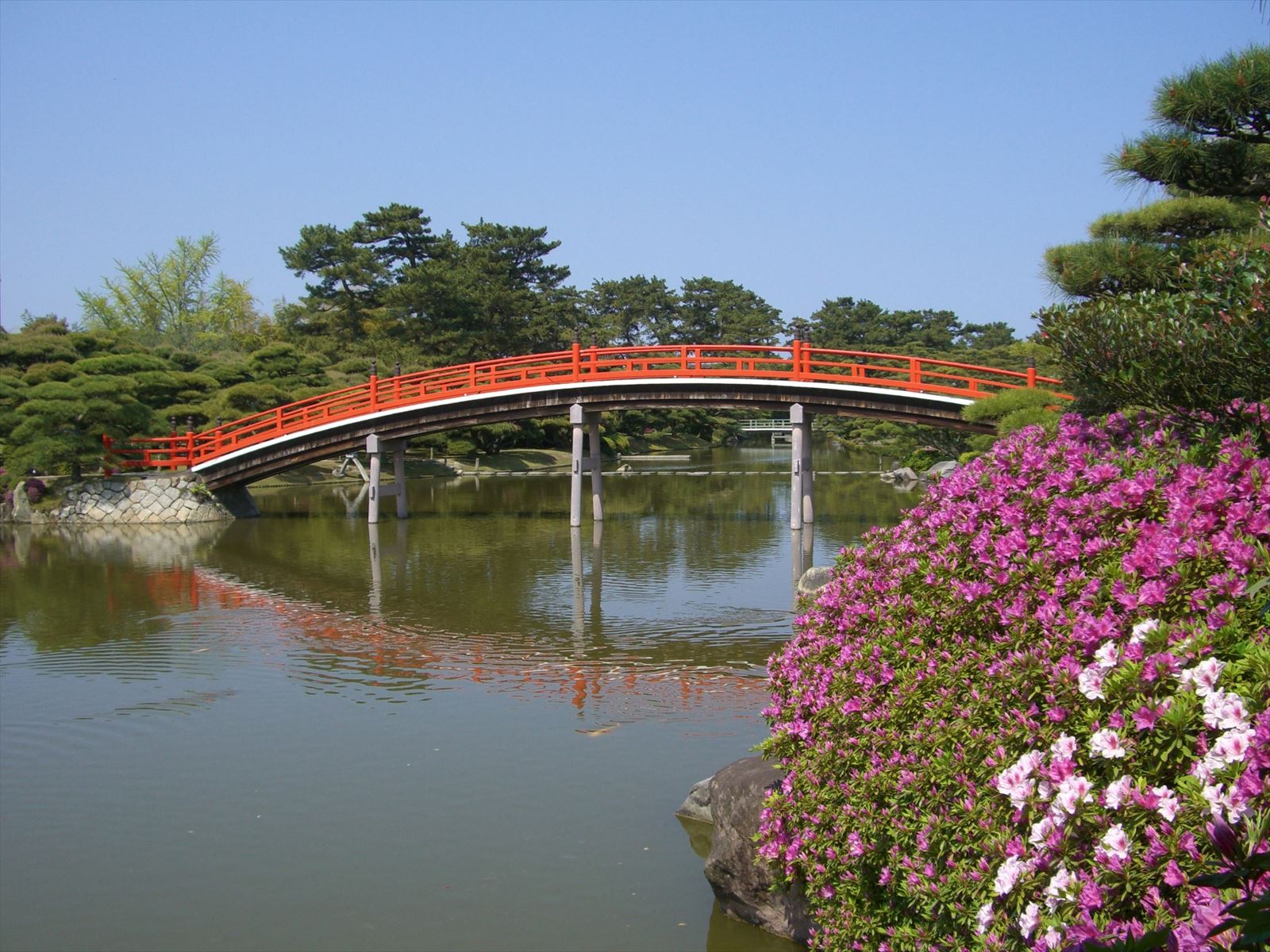
Beyond their cultural and natural beauty, both Nakazu Banshoen (pictured) and Mount Rokko offer serene settings to experience shinrin-yoku, or forest bathing – the Japanese practice of immersing oneself in nature to restore calm and clarity.
Nakazu Banshoen is a strolling-style feudal lord’s garden built in 1688 by Takatoyo Ky?goku, lord of the Marugame domain, on the seashore of Nakazu. At its center lies “Hakkei Pond,” modeled after Lake Biwa in ?mi, the Ky?goku family’s ancestral land. The pond features eight islands and bridges, creating an elegant landscape. From Kanch?r?, the oldest surviving sencha tea house, preserves the quiet elegance of traditional tea culture. The garden also houses the 650-year-old “Great Umbrella Pine,” an art gallery displaying Barbizon school paintings, and a ceramics museum with Oriental pottery, making it a cultural space where nature, art, and history harmoniously converge. Nakazu Banshoen is a rare destination that encapsulates the essence of Japanese culture, blending garden aesthetics, art, and spirituality.
A similar restorative spirit can be found at Mount Rokko, long regarded as a sacred site and once serving as a training ground for Shugendo practitioners. In the Edo period, it drew pilgrims with the arrival of railways in the Meiji era, it evolved into a beloved mountain retreat. Today, Mount Rokko remains a place of balance preserving its natural environment including the famed “10 Million Dollar Night View.” Its network of scenic hiking trails, botanical gardens, art museums, hot springs, and seasonal events create a multi-sensory experience that celebrates the deep connection between nature and well-being.